Who Is Driving Your Company Vehicles? Why Driver's Licence Checks Matter More Than Ever
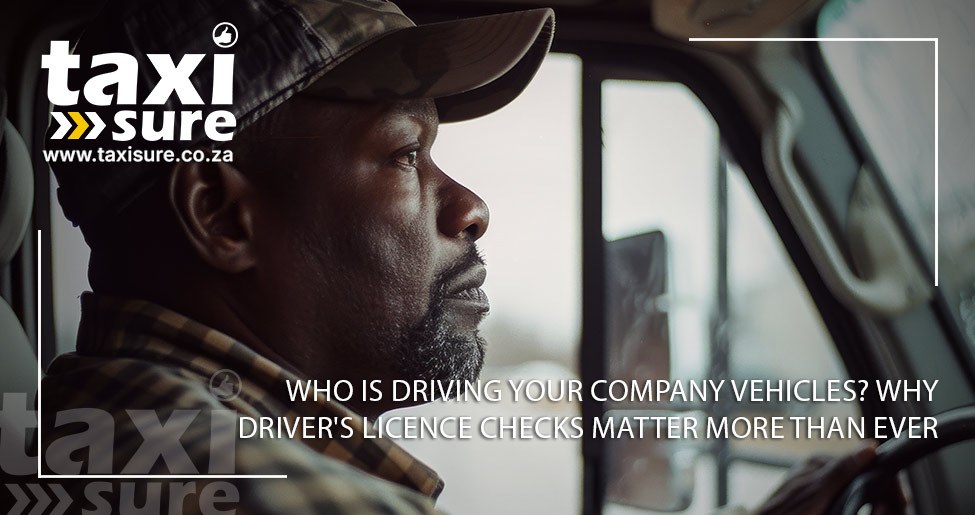
For many taxi, shuttle and transport operators, checking a driver’s licence is still treated as an administrative box to tick. A copy is taken when the driver starts, it gets filed away, and the keys get handed over.
The problem is that a licence can expire, get suspended or revoked, or turn out to be the wrong code for the vehicle being driven. In more serious cases, it may never have been legitimate at all. Insurers and road traffic authorities are seeing enough of this that driver verification deserves a lot more attention from anyone running more than one vehicle.
This is not just an insurance industry warning
There is credible evidence that licence fraud and unlicensed driving remain a real problem in South Africa.
The Road Traffic Management Corporation’s 2023/24 Annual Report records 490 fraud and corruption investigations, including 150 matters specifically classified as Driving Licence Testing Centre fraud and corruption. The RTMC’s National Traffic Anti-Corruption Unit also made 80 arrests during that reporting period, including 23 relating to Driving Licence Testing Centres. (RTMC)
In October 2024, the RTMC announced the arrest of eight licensing officials and agents following an investigation into a syndicate allegedly arranging driving licences for applicants who had not undergone the required testing process. (RTMC)
More recently, the problem is still showing up during roadside enforcement. Between 1 and 6 September 2026, Gauteng Transport Inspectorate operations identified 103 drivers operating without valid driving licences in just six days. (South Africa Government)
The RTMC has also been rolling out computerised learner licence testing specifically to reduce opportunities for fraud. In 2026 it reported that the national learner licence test pass rate had dropped from 68% to 40% following computerisation, which removes much of the opportunity for officials to know test papers in advance or unlawfully assist applicants. (SA News)
Against that background, glancing at a card and assuming everything is in order is becoming harder to justify as a fleet-management control.
What happens if an unlicensed driver has an accident?
This is where operators need to understand the real financial risk.
There is a very real possibility that a motor claim gets rejected if the vehicle was being driven by someone not properly licensed to drive it.
The exact outcome always depends on the wording of the particular policy and the circumstances of the claim. Many commercial motor policies do, however, contain specific exclusions relating to valid driver’s licences.
For example, the current Hollard Business Policy wording available to us specifically excludes claims where the insured drives while not holding a valid licence for the vehicle. It also deals with authorised drivers who do not hold a valid licence and with drivers who require a valid Professional Driving Permit (PrDP). Importantly, the wording provides potential protection in certain circumstances where the insured genuinely did not know about the problem and can show that procedures were in place to ensure that only properly licensed drivers were permitted to drive the vehicles.
That last point matters.
It is not enough to say after an accident: “We didn’t know the licence wasn’t valid.”
The question may become: what did the operator actually do to check?
South African courts have already dealt with this
This is not a theoretical insurance issue.
In Mutual and Federal Insurance Ltd v Gouveia, an insured vehicle was hijacked while being driven by an unlicensed driver. The insured argued that the lack of a driver’s licence had nothing to do with the hijacking.
The Supreme Court of Appeal nevertheless upheld the insurer’s reliance on the policy exclusion. The wording excluded losses occurring while the vehicle was being driven by an unlicensed driver, so the insurer did not have to prove that the absence of the licence caused the hijacking. (Law Library)
That is an important lesson for any fleet owner. Do not assume a claim will be paid simply because the driver’s licence status did not cause the accident. The wording of the policy matters.
Another South African case, Ponderosa Pine Trading 31 CC v Santam Limited, involved a truck driver whose licence code was insufficient for the vehicle he was driving. The policy contained an exception for unlicensed drivers, but also allowed for circumstances where the insured was unaware of the problem and could demonstrate proper procedures for checking licences.
The court found that the required controls had not been demonstrated. It specifically referred to checks such as confirming the driver’s licence, the vehicle’s permitted mass, and whether the licence had expired. (SAFLII)
That case gets to the heart of it: an operator needs a process, not just a photocopy.
The financial exposure can extend far beyond your own vehicle
A rejected claim could leave the business carrying the cost of repairing or replacing its own vehicle.
But think about a more serious accident involving a minibus, bus or other fleet vehicle.
There could also be damage to another vehicle, a building or other third-party property, injuries to passengers or other road users, towing and recovery costs, and significant legal expenses.
South Africa’s broader road-accident figures show how significant this exposure already is. The RTMC recorded 11,485 road fatalities during 2025 and estimated the economic cost of road crashes for that year at approximately R198.3 billion. (RTMC)
For an operator running multiple vehicles, driver compliance is part of overall risk management, not just an admin filing requirement.
What should operators be checking?
Before a driver, contractor or temporary hire is given the keys to a fleet vehicle, it is worth establishing that the licence is genuine and valid, that the licence code actually permits that person to drive the specific vehicle, and whether a PrDP (Professional Driving Permit) is required.
It also helps to record expiry dates and review licences periodically, rather than only at the start of employment.
A proper authorised-driver register would ideally record the driver’s details, licence number, licence code, relevant expiry dates, PrDP details where applicable, the vehicles or classes of vehicle the person may drive, and when the information was last checked.
That kind of record can matter a great deal if an insurer asks, following a claim, what the operator actually did to make sure only properly licensed drivers were behind the wheel of its vehicles.
Don’t wait for the accident to find the problem
Catching a problem early beats finding it out the hard way.
Spotting that a driver’s PrDP is about to expire, that someone has the wrong licence code for the vehicle they are operating, or that a document needs checking before a vehicle leaves the yard, is a far better position to be in than discovering it after a serious accident, when an insurer starts asking questions about the claim.
For a fleet owner, the question should no longer just be: “Do we have a copy of the driver’s licence on file?”
It should be: “Do we know that this person is legally entitled to drive this vehicle today, and can we show that we checked?”
Get your fleet properly covered
Driver checks are one side of managing risk. Having the right commercial cover behind your vehicles is the other.
If you run a minibus taxi, shuttle or transport fleet, TaxiSure’s minibus taxi cover is built for operators managing more than one vehicle and more than one driver, whether that is a single vehicle out of a rank or a small association fleet.
Call or WhatsApp TaxiSure on 062 179 0033 to talk through your fleet’s cover.
Frequently asked questions
Can an insurer reject a claim if the driver’s licence had expired?
It is possible. Many commercial motor policies exclude claims where the driver did not hold a valid licence for the vehicle. The exact outcome depends on the specific policy wording and the circumstances of the claim.
Does it matter if the unlicensed driver’s status did not cause the accident?
Not necessarily. In Mutual and Federal Insurance Ltd v Gouveia, the Supreme Court of Appeal upheld an insurer’s reliance on a policy exclusion for an unlicensed driver even though the lack of a licence had nothing to do with the hijacking that occurred.
What does “the wrong licence code” mean, and can it affect a claim?
A driver’s licence code sets out which classes of vehicle they may legally drive. In Ponderosa Pine Trading 31 CC v Santam Limited, a truck driver’s licence code was insufficient for the vehicle he was driving, and the court found the operator had not shown the checking procedures needed to rely on a policy exception.
Is a police-style licence check enough, or does an operator need a formal process?
Court findings suggest a formal, demonstrable process matters more than a one-off check. In the Ponderosa Pine case, the court looked specifically at whether checks such as confirming the licence, the vehicle’s permitted mass, and the expiry date had actually been carried out.
Do PrDP requirements apply to fleet drivers as well as owner-drivers?
Yes. Any driver carrying passengers or goods for reward generally needs the correct PrDP category, regardless of whether they own the vehicle or drive it as an employee or contractor for a fleet operator.
How often should a fleet operator review driver’s licences?
There is no single legal interval, but reviewing licences and PrDPs periodically, rather than only when someone joins, gives an operator a better chance of catching an expiry, suspension or code mismatch before it becomes a claims problem.
Sources
- RTMC 2023/24 Annual Report
- RTMC press release, Takedown Operation in Northern Cape (October 2024)
- South African Government news, Gauteng enforcement results (September 2026)
- SA News, computerised testing reduces corruption at licensing centres
- Mutual and Federal Insurance Ltd v Gouveia (SCA)
- Ponderosa Pine Trading 31 CC v Santam Limited (SAFLII)
- RTMC State of Road Safety Report 2025
Taxisure Risk Specialists (Pty) Ltd | Authorised Financial Services Provider | FSP 52693
This article is for informational purposes only and does not constitute financial advice.
You Transport the Nation. We Make Sure You Are Covered.TaxiSure · South Africa's Transport Risk Specialists
You Transport the Nation. We Make Sure You Are Covered.TaxiSure · South Africa's Transport Risk Specialists